01 / CONTAINER TRANSPORT
PORT & RAIL DRAYAGE
Road movements connecting terminals, yards, warehouses and delivery sites. Discuss appointments, chassis requirements and empty returns.
DISCUSS YOUR REQUIREMENTS ↗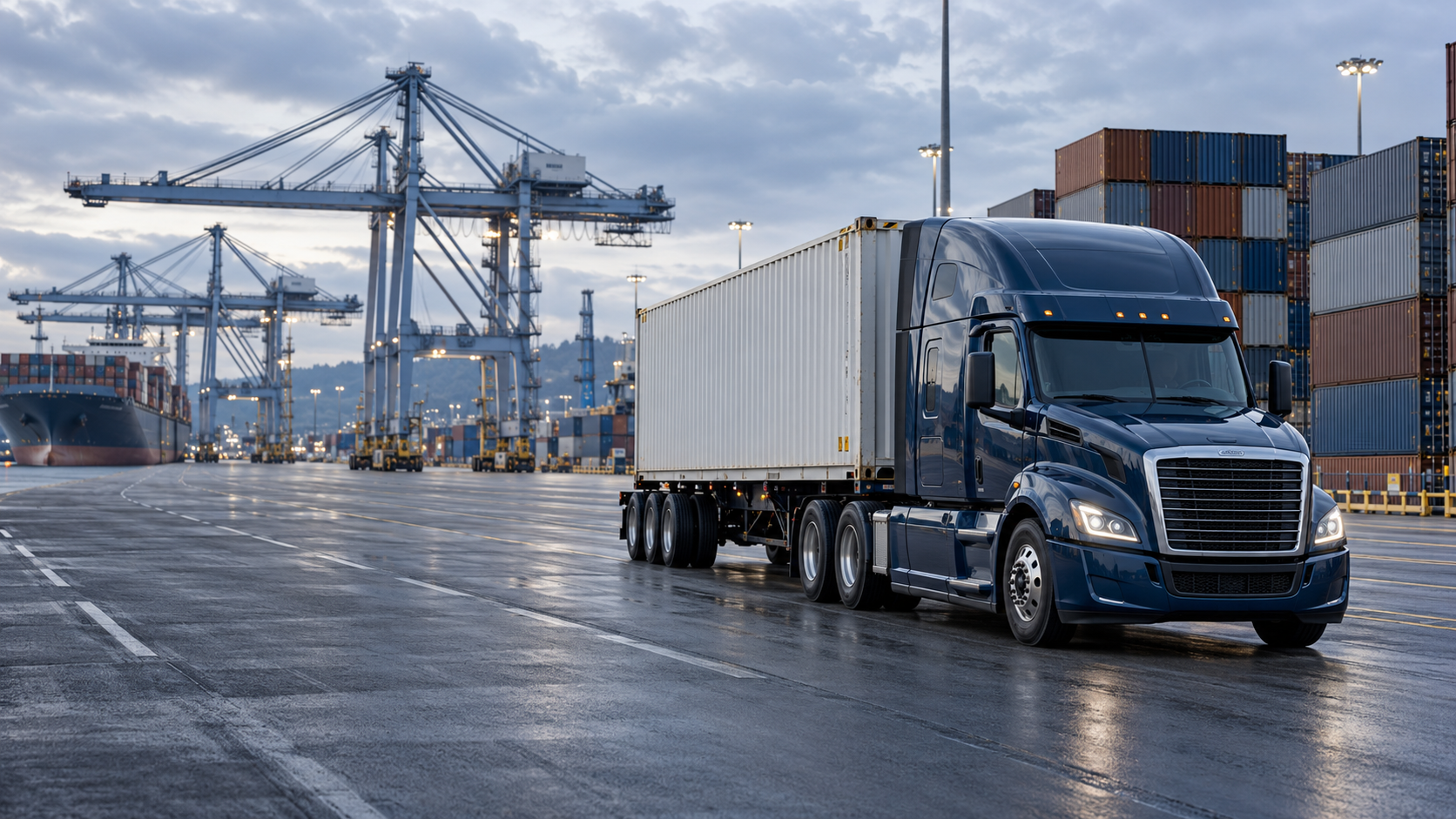
HOWL / CONTAINER & PORT SERVICES
Container transport, cross-border drayage and freight handling. Bring every part of the inland move into one clear plan.
PLAN A CONTAINER MOVE ↗CONNECT THE WATERFRONT TO THE ROAD.
From terminal release to the next delivery, start with the route, cargo and handling details.
01 / CONTAINER TRANSPORT
Road movements connecting terminals, yards, warehouses and delivery sites. Discuss appointments, chassis requirements and empty returns.
DISCUSS YOUR REQUIREMENTS ↗02 / IMPORT & EXPORT
Plan the inland leg of your ocean shipment, with port collection or export delivery coordinated around the booking.
DISCUSS YOUR REQUIREMENTS ↗03 / CANADA–U.S.
Share the route, cargo and customs-broker details to discuss a container move across the Canada–U.S. border.
DISCUSS YOUR REQUIREMENTS ↗04 / TEMPERATURE CONTROL
Setpoint, power, ventilation and monitoring needs shape the movement. Genset and suitable equipment availability are confirmed for each load.
DISCUSS YOUR REQUIREMENTS ↗05 / FREIGHT TRANSFER
Transfer cargo to onward equipment, or coordinate receiving, sorting, consolidation and palletization at the handoff.
DISCUSS YOUR REQUIREMENTS ↗06 / STORAGE & DISTRIBUTION
Discuss the volume, storage period, handling conditions and release schedule for freight awaiting its next move.
DISCUSS YOUR REQUIREMENTS ↗07 / SPECIALIST CARGO
Declare the commodity and gross weight early. Suitable equipment, route feasibility and required authorizations are reviewed before acceptance.
DISCUSS YOUR REQUIREMENTS ↗08 / CUSTOMS STATUS
For freight requiring bonded carriage, confirm the performing carrier’s bonding, approvals and customs responsibilities before booking.
DISCUSS YOUR REQUIREMENTS ↗09 / CONNECTED LOGISTICS
Discuss the road, ocean-interface, warehouse and specialist-provider requirements of your wider shipment.
DISCUSS YOUR REQUIREMENTS ↗Service arrangements, facilities, equipment, terminal access and required approvals are confirmed before booking. Ocean carriage and customs brokerage are separately agreed with the responsible providers.
MATCH THE EQUIPMENT TO THE CARGO.
Tell us the container type, size and gross weight when you request a quote.
General containerized cargo. Include size, high-cube requirements and loading status.
Temperature-sensitive cargo. Specify setpoint, ventilation and power needs.
Machinery and project cargo. Provide dimensions, weight and securing requirements.
Cargo requiring overhead access. Include height, loading method and weather protection needs.
Suitable liquid or bulk commodities. Specify the product and tank particulars.
Dense bulk cargo. Confirm the commodity, handling arrangement and gross weight.
PACIFIC NORTHWEST & BEYOND
Discuss container lanes involving British Columbia, Washington and Oregon, alongside broader Canada–U.S. transport enquiries.
Specific terminals, port access, appointments, operating authority and lane availability are confirmed for the shipment. These enquiry areas do not represent owned terminals, daily scheduled service or port partnerships.
DISCUSS A PORT MOVE ↗GET THE DETAILS IN PLACE.
A complete shipment brief helps build a more useful quote.
BUILD YOUR REQUEST ↗